
When to See an Orthodontist
Some orthodontic problems announce themselves. Others are subtle. Here are the signs to watch for, at every age.
Watch For These
Signs You May Need Orthodontic Treatment
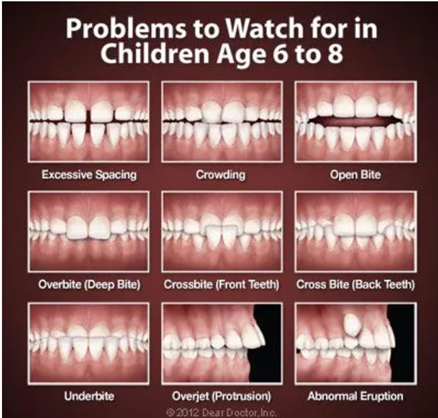
Crooked, crowded, or gapped teeth are the obvious ones, you can see those in the mirror (our common problems page shows what each looks like). But other conditions aren't as clear-cut. Any of these may be a sign that orthodontic treatment is needed:
- Mouth breathing
- Clenching or grinding your teeth
- Inability to comfortably close your lips
- Jaws that frequently shift in position or make sounds as they move
- Unintentionally biting your cheek or the roof of your mouth
- Teeth that meet abnormally, or don't meet at all
Teeth that meet abnormally can even cause a facial imbalance (asymmetry), meaning some facial features aren't in proportion with others. This is a problem that can often be corrected by orthodontic treatment.
For Children
Why Age 7 Is the Magic Number
The American Association of Orthodontists recommends that your child have an orthodontic examination by age 7, for two very good reasons. First, there's a wide disparity in tooth development at that age, so it takes an expert to tell whether a child actually has a problem or is just developing on their own schedule. Second, the molars and jaw are still developing, which lets us evaluate existing problems and spot ones that may develop, while they're still simple to correct.
An early exam doesn't necessarily mean early braces. For most patients, the best time to start treatment is between ages 9 and 14, when most baby teeth are gone and the adult teeth are in. Learn how we approach early treatment and what a first appointment looks like.
For Adults
Now, How About You?
You know when your child should come in for an orthodontic exam. Do you cover your mouth with your hand when you smile? Are you self-conscious around strangers because your smile isn't what you want it to be? Maybe you think orthodontics is just for kids. Time to think again: according to the AAO, around one in five orthodontic patients today is an adult.
Orthodontic treatment can be successful at any age, and in older patients, compliance isn't usually an issue. With discreet options like clear aligners and ceramic braces, treatment fits adult life better than ever. See our adult treatment page for what to expect.
The Only Way to Know for Sure
If anything on this page sounds familiar, for you or your child, a consultation at our New Baltimore or East China office will give you a clear answer and a plan.
Request an Appointment